How SpeedGeens works
1. Design of experiments (DoE)
You tell us which variables you want to test—examples:
Airspeed
Yaw angle
Wheel type
Tyre model
Position options
Equipment choices
SpeedGeens then creates an optimal experimental setup:
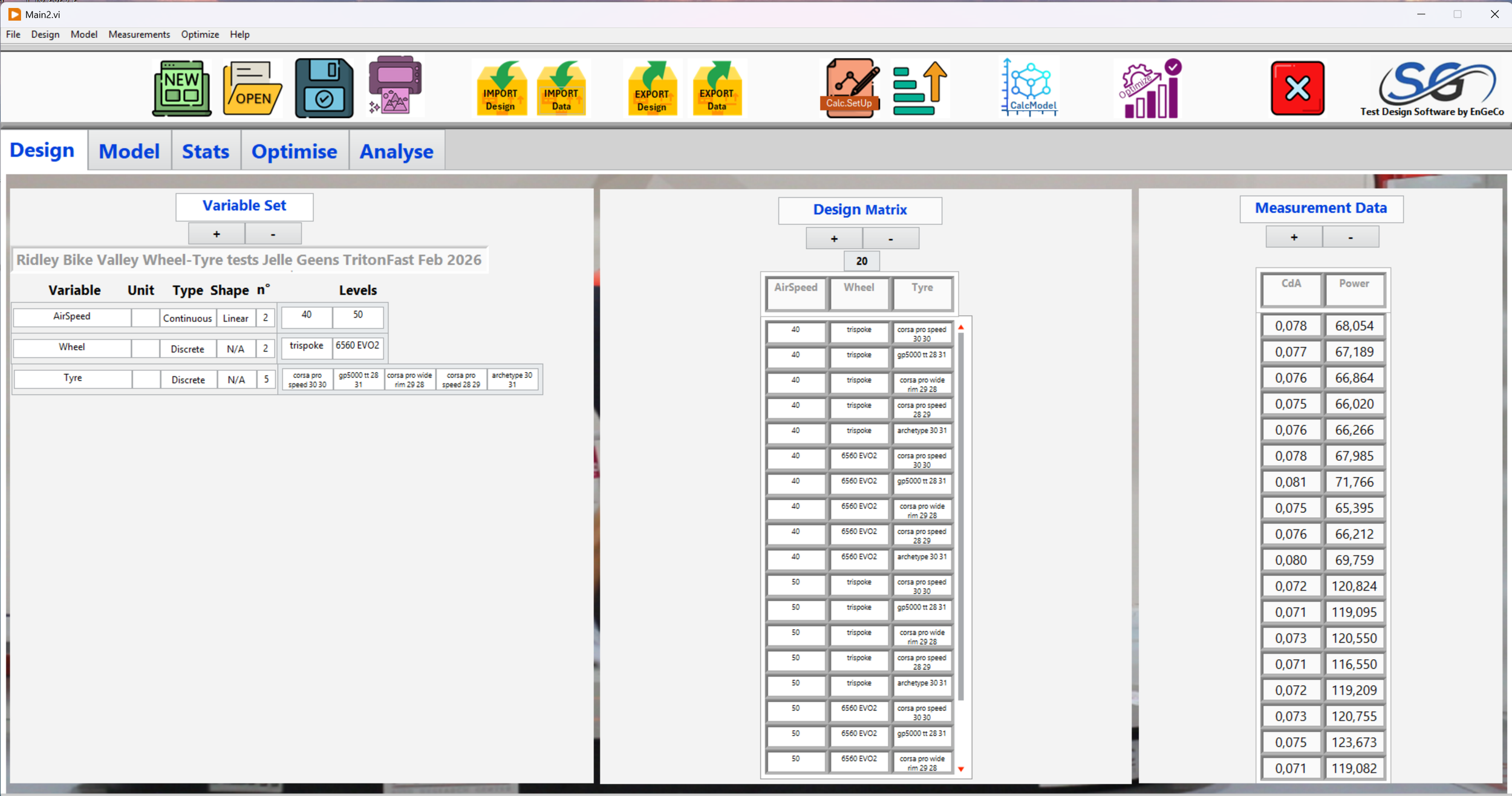
Defines variables and levels
Builds a Design Page with a statistically efficient test matrix
Minimizes the number of runs while maximizing information
2. You perform the tests
You (or your testing partner) perform the aerodynamic tests:
Wind tunnel
Velodrome
Field testing with commercially available sensors
You measure CdA, Power or any other response for each run and feed the data back to SpeedGeens.
3. Statistical modeling
SpeedGeens uses multiple linear regression to build a statistical model of your responses:
CdA as a function of all variables
Power as a function of all variables
This model:
Captures main effects and interactions
Allows prediction for every combination of the tested variables
Integrates yaw‑angle weighting to reflect realistic wind distributions
4. Explore and understand your aero landscape
With the model built, you can explore your data in depth:
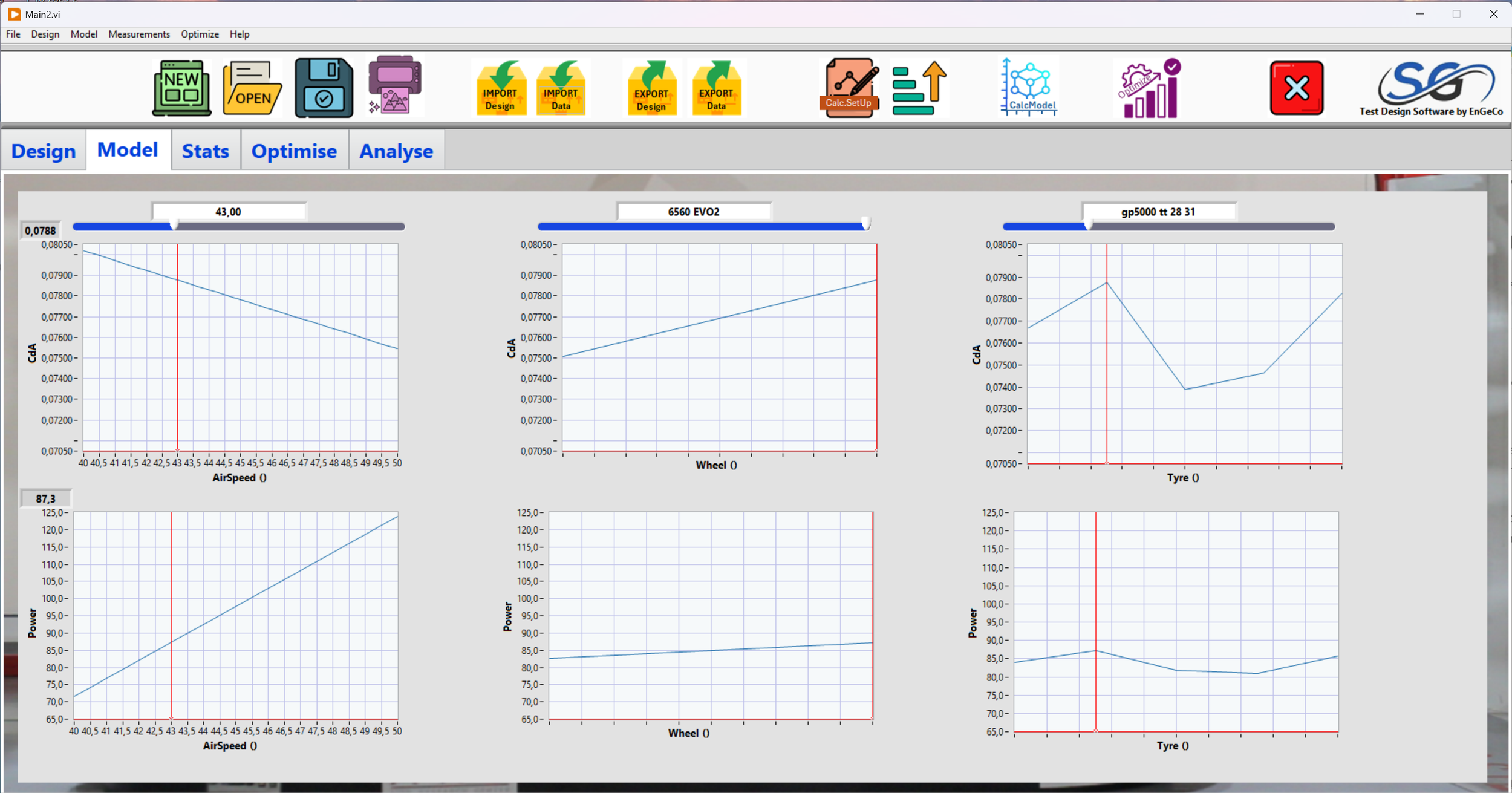
Plot CdA, Power or other measured values vs any variable as a function of the other variables
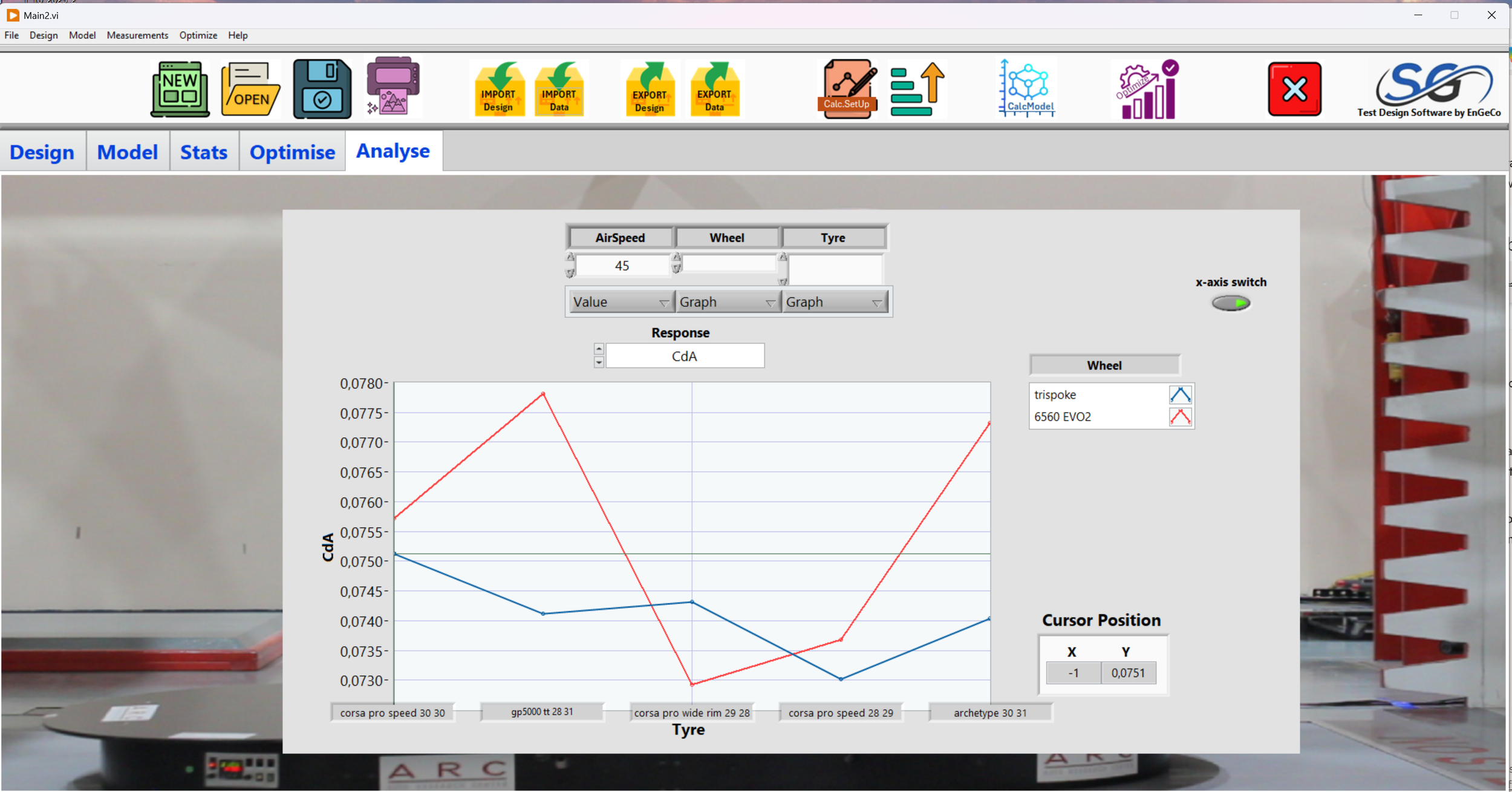
Compare all variables (wheels, tyres, helmets,..) at fixed airspeed
See how changes in one variable depend on another
5. Find the optimal setup
Finally, SpeedGeens includes an optimization module that:
Searches the entire model
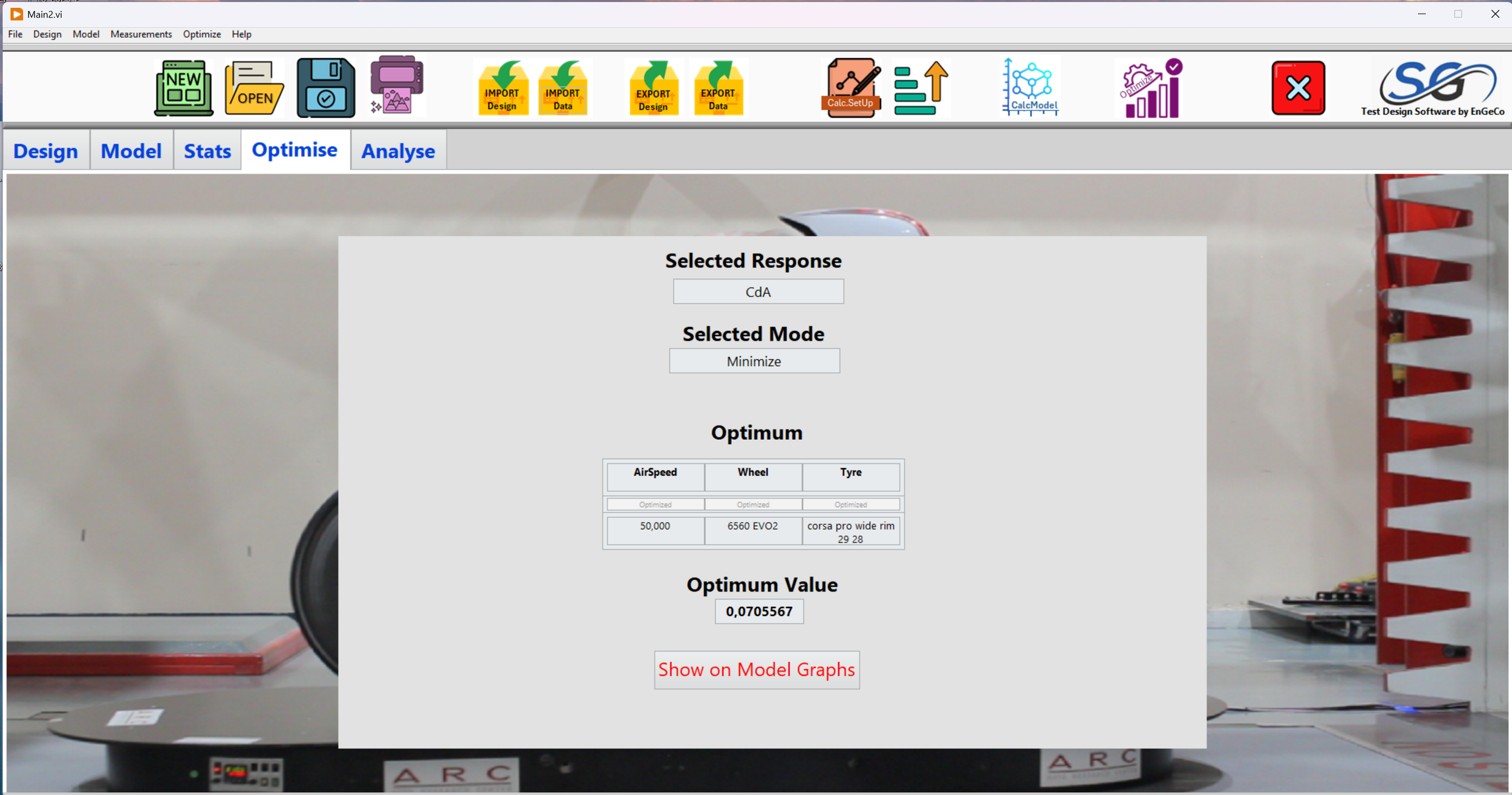
Finds the combination that minimizes CdA or Power
Returns the exact wheel, tyre, equipment or positions for the fastest setup
Lets you show the optimum on the model graphs